
Orthokeratology is a non-surgical vision correction method that uses specially designed rigid contact lenses worn overnight to gently reshape the cornea, so you can see clearly throughout the day without spectacles or daytime contacts. This innovative approach allows for complete freedom from visual aids during your waking hours, making it a popular choice for active individuals and children alike.
Here is a quick summary of what you need to know:
- What it is: Custom-made rigid lenses worn only while you sleep.
- How it works: The lenses temporarily reshape the front surface of your eye (the cornea) overnight.
- Who it suits: Children and adults with mild to moderate Short-sightedness.
- Key benefit for kids: It can slow the progression of myopia, not just correct it.
- Safety: Fully reversible and safe when properly managed by a qualified optometrist.
- Results: Most people notice clearer vision after the very first night, with full correction usually reached within one to two weeks.
At The Focal Point Optometrist, we work with families and individuals in Wembley and across Western Australia who want more than a generic solution to their vision needs. We pride ourselves on being a healthcare-focused practice, which is why we dedicate significant time to every patient. Our initial consultations for orthokeratology take a full 1 hour (60 minutes) to ensure we capture every detail of your eye health and visual requirements.
Imagine waking up and seeing the world clearly before even getting out of bed. No reaching for spectacles. No fumbling with contact lenses. For thousands of people, this is already their everyday reality. In this guide, we will walk you through everything you need to know about orthokeratology, from the science behind how it works to whether it could be the right fit for you or your child, providing you with the knowledge to make an informed decision about your long-term eye health.
What is Orthokeratology?
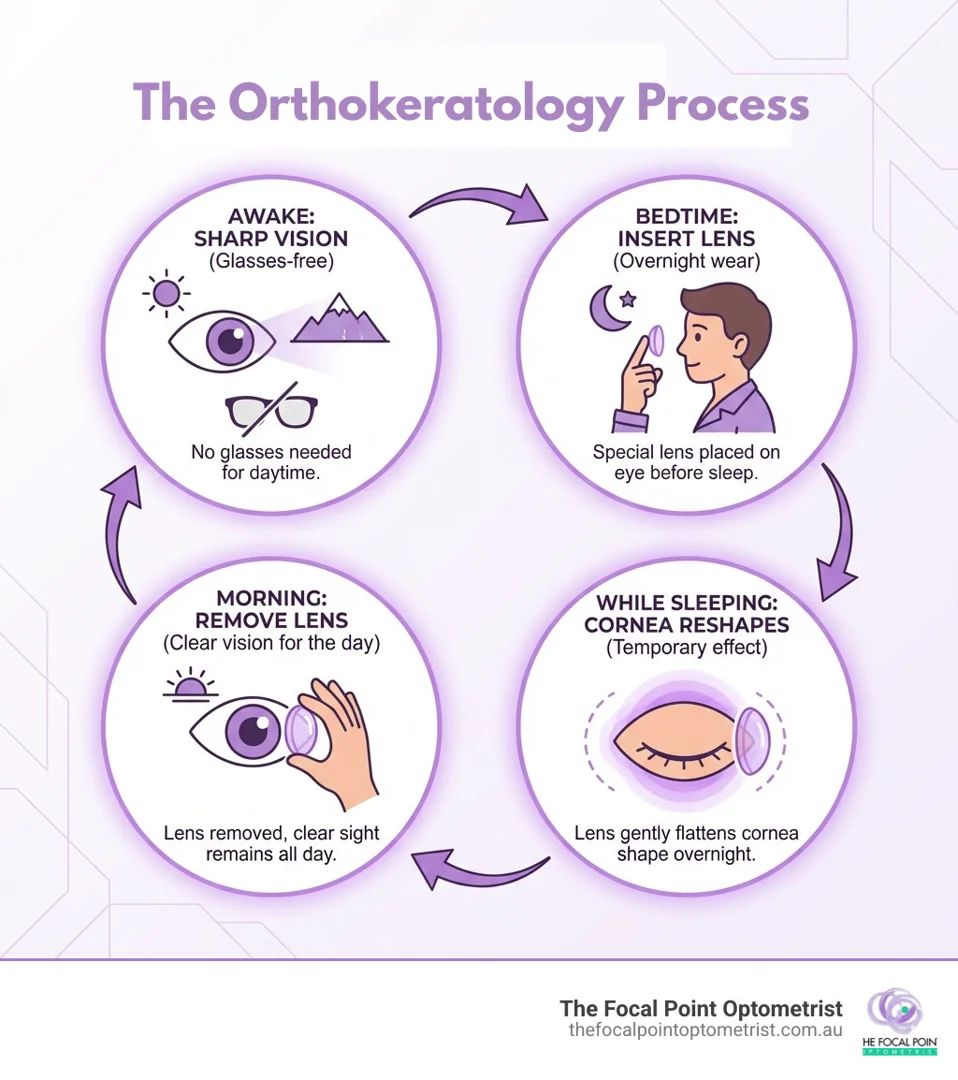
Orthokeratology uses rigid gas permeable (RGP) “retainer” lenses worn overnight to temporarily reshape the cornea. Unlike daytime contact lenses, Ortho-K lenses are only worn while sleeping, letting you enjoy clear vision throughout the day without spectacles or traditional contacts.
How Orthokeratology Works to Reshape the Cornea
The cornea is the clear, dome-shaped front surface of your eye that accounts for about 60% of your eye’s focusing power. In a Short-sighted eye, the cornea is often too curved or the eyeball is too long, causing light to focus in front of the retina rather than directly on it. This results in blurred distance vision. Ortho-K lenses do not “crush” the eye; instead, they gently apply “proximal pressure” to the tear film, which encourages the surface epithelial cells to redistribute.
This creates a slight flattening of the central cornea, usually by only about 6 micrometres (0.00024 inches), which is roughly 5% of a human hair’s thickness. This tiny adjustment is enough to correct your prescription and allow light to focus correctly on the retina. Research indicates that this redistribution of cells is highly predictable and safe when monitored by a professional. Because the cornea is highly elastic, it maintains this new shape for the duration of the day, gradually returning to its original state if the lenses are not worn consistently at night.
The History and Evolution of Night Lenses
While the concept of corneal reshaping dates back decades, early attempts in the 1960s using PMMA materials were unpredictable and often uncomfortable. The real breakthrough came in the 1990s with the advent of computerised corneal topography and high oxygen-permeable materials. These advancements transformed orthokeratology from an art into a precise science. Modern RGP materials allow your eyes to “breathe” comfortably all night long, providing the cornea with the oxygen it needs to stay healthy.
This led to formal regulatory approvals for overnight wear in the early 2000s, making it a globally recognised standard for vision correction. Today, we use sophisticated software to design lenses that are customised to the unique landscape of your eye, ensuring a fit that is both comfortable and effective. At our Wembley practice, we stay at the forefront of these technological shifts to provide our patients with the best possible outcomes for their vision and eye health.
The Benefits of Orthokeratology for Myopia Control
One of the most significant reasons we recommend Ortho-K at our Wembley practice is its ability to slow down the progression of Short-sightedness in children. Myopia is not just about needing spectacles; it is a condition where the eyeball grows too long (axial elongation), increasing the risk of serious eye diseases later in life. You can learn more about why managing myopia early is so important for long-term health.
Slowing Myopia Progression in Children
Clinical studies have shown that orthokeratology provides a 32% to 63% reduction in axial elongation compared to children wearing standard spectacles. By reshaping the cornea, Ortho-K creates “peripheral myopic defocus,” a specific optical signal that tells the brain to slow down the eye’s growth. This is crucial because high myopia is a known risk factor for several sight-threatening conditions that can emerge in adulthood.
In Australia, the prevalence of myopia is increasing, and we are committed to helping our younger patients avoid the complications associated with high prescriptions. These risks include:
- Myopic Maculopathy: This condition affects the central vision area (the macula) and is significantly more common in individuals with high myopia due to the stretching of the retina.
- Glaucoma: High myopia is a known risk factor for increased eye pressure and optic nerve damage, which can lead to permanent vision loss.
- Cataracts: People with high myopia tend to develop cataracts at an earlier age than those with normal vision.
Using Ortho-K for myopia control in kids is one of the most proactive steps a parent can take to safeguard their child’s future vision.
Lifestyle Advantages for Active Adults and Athletes
For adults, Ortho-K offers a lifestyle of freedom that traditional correction cannot match. It is particularly beneficial for:
- Athletes: Especially those in contact sports or water activities like swimming and surfing where spectacles or daytime contacts are impractical or can be easily dislodged. You no longer have to worry about losing a lens in the pool or having your spectacles fog up during a match.
- Dry Eye Sufferers: Many people find daytime contacts uncomfortable because they exacerbate dry eye symptoms. Since Ortho-K lenses are only worn at night while you sleep, your eyes remain moist and comfortable during the day. Dry eye is a chronic condition where the tear film fails to maintain its health and stability, and avoiding daytime lens wear can significantly improve comfort.
- Dusty Environments: Tradies or outdoor workers in Perth often struggle with dust getting trapped behind daytime lenses, leading to irritation and potential scratches on the cornea. Ortho-K eliminates this issue entirely, providing clear vision without the environmental hassle.
Who is a Good Candidate for Ortho-K?
Not everyone is a perfect fit for orthokeratology, which is why we perform a comprehensive assessment at our practice. Generally, the best candidates are those with mild to moderate Short-sightedness, but technology is constantly expanding these boundaries. We suggest checking suitability guidelines if you are curious about the technical requirements. During your initial 1 hour (60 minute) consultation, we will take the time to thoroughly evaluate your eyes and discuss your lifestyle needs.
Refractive Error Ranges and Suitability
Most Ortho-K systems are approved for myopia up to -6.00 dioptres and astigmatism up to 1.75 dioptres. However, some specialised designs can correct higher levels of Short-sightedness or even help with Long-Sightedness and presbyopia (age-related near vision loss). During our assessment, we will measure your prescriptions and corneal curvature using advanced mapping technology. We also check for any contraindications, such as severe dry eye or corneal dystrophies, to ensure the treatment will be successful and comfortable.
If we find that you are not a suitable candidate, we will discuss alternative options, such as specific daytime lenses or a referral to an ophthalmologist for surgical considerations if appropriate.
Is Orthokeratology Safe for My Child?
We often get asked if children are too young for Ortho-K. We generally consider children from age 6 years and up, provided they (and their parents) are motivated. Success depends heavily on a child’s maturity and their ability to follow hygiene protocols. We find that children are often very resilient and adapt to the lenses quickly, especially when they see the immediate benefit of not needing spectacles for school or sport.
We provide a dedicated 1 hour (60 minute) “teach” appointment to ensure both the child and parent are confident in handling the lenses. Because the treatment is 100% reversible, it is a fantastic option for children whose eyes are still changing. If you stop wearing the lenses, the eye simply returns to its original shape, making it a low-risk entry into vision correction. We also monitor our young patients closely with regular check-ups to ensure their eyes remain healthy as they grow.
The Fitting Process and What to Expect
The journey to clear vision without spectacles is a multi-step process that requires precision and patience. We use the latest technology to ensure your lenses are as unique as your fingerprints. This fitting journey is designed to be supportive and educational, ensuring you feel confident at every stage.
Understanding Corneal Topography
The most critical tool in the fitting process is the corneal topographer. Topography refers to the detailed mapping of the surface of the eye, particularly the cornea. It is a non-invasive test where a device reflects rings of light off the surface of your eye to create a 3D map. This helps us understand the unique shape and curvature of your eye, which is essential for designing customised lenses.
Think of it like taking a 3D mould of your eye’s “landscape.” Without this map, Ortho-K would be guesswork; with it, it is a highly predictable science that allows us to monitor even the smallest changes in your eye shape. We use this data to order your bespoke lenses, which are manufactured to sub-micron accuracy. This level of customisation is why we can achieve such high success rates for our patients in Wembley.
Your First Night and the Adaptation Period
Most patients notice a significant improvement in their vision after just one night of wear. Most people achieve clear or better vision (at least to the legal driving standard) within the first few days. However, it typically takes 1 to 2 weeks of consistent nightly wear to reach maximum correction. During the first few days, you might experience some “ghosting” or halos around lights at night as the cornea settles into its new shape. This is completely normal and expected.
We may provide temporary daily lenses or spectacles if needed during this transition period so you can still go about your day safely. We will schedule follow-up appointments at one day, one week, and one month to monitor your progress and ensure the lenses are fitting perfectly. Our goal is to make the transition as smooth as possible, providing you with the support you need to achieve the best visual outcome.
Safety, Hygiene, and Long-Term Eye Health
Safety is our top priority. When performed correctly and monitored by a professional optometrist, orthokeratology is very safe, with an infection risk comparable to regular daytime contact lenses. Most issues can be avoided with proper education and adherence to the care routines we provide during your 1 hour (60 minute) teach appointment.
Managing Risks and Potential Side Effects
The incidence of severe eye infections (microbial keratitis) in Ortho-K wearers is approximately 5.4 cases per 10,000 patient-years. To put this in perspective, this is a very low risk, and most complications arise from poor hygiene or improper lens care.
If you ever experience sore eyes, conjunctivitis, or blurred vision that doesn’t clear, you should remove the lenses and contact us immediately. We always keep emergency slots available for our patients to ensure any concerns are addressed right away. For systemic issues or the need for oral antibiotics, we may coordinate care with your General Practitioner (GP).
Essential Maintenance for Your Lenses
To keep your eyes healthy, you must follow a strict hygiene routine. We will walk you through this in detail, but the core principles include:
- No Tap Water: Never rinse your lenses or case with tap water. Tap water can contain microorganisms like Acanthamoeba that cause rare but devastating infections.
- Daily Cleaning: Use the recommended solutions, often a hydrogen peroxide system, to disinfect lenses daily. This ensures that proteins and lipids from your tear film are removed. Having said this, we recommend Menicare as that’s what we use.
- Hand Washing: Always wash and dry your hands thoroughly before touching your eyes or lenses to prevent the transfer of bacteria.
- Case Replacement: Replace your lens case every 3 months to prevent bacterial buildup.
- Annual Replacement: Ortho-K lenses should generally be replaced every 18 to 24 months to maintain their shape and high oxygen permeability. Over time, the material can degrade or develop microscopic scratches that harbour bacteria.
- Avoid eye rubbing: Rubbing your eyes while the lenses are in can cause discomfort or displacement. If you feel an itch, it is best to use the lubricating drops recommended by our team.
Comparing Ortho-K to Other Vision Correction Options
When deciding on a vision correction path, it helps to see how Ortho-K stacks up against traditional methods. At The Focal Point Optometrist, we believe in providing you with all the information so you can choose the option that best fits your lifestyle and health goals.
| Feature | Orthokeratology | Spectacles | Daytime Contact Lenses |
|---|---|---|---|
| Surgical? | No | No | No |
| Reversible? | Yes | Yes | Yes |
| Myopia Control? | Yes (High) | No (Standard) | Some (Specific designs) |
| Daytime Freedom? | Yes | No | Yes (while worn) |
| Age Limit? | None (6+) | None | None (6+) |
| Initial Cost | Moderate | Low | Low to Moderate |
Ortho-K vs. LASIK Surgery
Both Ortho-K and LASIK let you enjoy clear vision without glasses during the day, but they work very differently. Ortho-K is non-surgical and fully reversible, making it a great option for children and young adults whose eyes are still changing. LASIK is a permanent surgical procedure that reshapes the cornea with a laser.
With Ortho-K, if your prescription changes, we can simply fit a new pair of lenses. LASIK is permanent, and further procedures may not always be possible (depending on corneal thickness). For many of our patients in Wembley, the flexibility and gentle approach of Ortho-K make it an easy choice.
A Clearer Future with The Focal Point Optometrist
Choosing the right vision correction is a big decision, especially when it involves your child’s long-term eye health. At The Focal Point Optometrist, we take a holistic approach, ensuring that every patient receives a personalised treatment plan backed by the latest clinical evidence. We are not just here to provide a prescription; we are here to partner with you in maintaining your vision for life. Whether you are looking for freedom from spectacles for sports or want to protect your child’s vision from progressing Short-sightedness, we are here to guide you every step of the way.
Ready to see if orthokeratology is right for you? We invite you to visit our Wembley practice for a comprehensive assessment. Please remember to bring your Medicare card to your appointment so we can process any relevant rebates for you. We look forward to helping you achieve the clear, natural vision you deserve.
Book an eye test or Contact us today to start your journey toward clearer vision.
FAQs
What happens if I stop wearing my Ortho-K lenses?
Because Ortho-K is non-surgical, the effect is entirely reversible. If you stop wearing the lenses, your cornea will gradually return to its original shape, usually within 72 hours. Your original Short-sightedness will return, and you will need to go back to wearing spectacles or daytime contact lenses. This reversibility is one of the key safety features of the treatment, as it allows you to change your mind or switch to other correction methods at any time without permanent changes to your eye.
Can I see with my Ortho-K lenses on?
Yes, you certainly can. One of the great benefits of Ortho-K is that the lenses are designed to be seen through clearly. If you need to get up in the middle of the night to attend to a child or use the bathroom, you will be able to see perfectly with the lenses in. You will also have clear vision as soon as you wake up in the morning before you even take them out, which many patients find to be a wonderful way to start their day.
How much does Ortho-K cost compared to spectacles?
The initial cost of Ortho-K is higher than a single pair of spectacles because it includes the custom-designed lenses, the advanced mapping technology, and multiple follow-up appointments over the first few months.
However, many patients find it cost-effective over time, especially when considering the lifestyle benefits and the potential savings on future high-index lenses or medical treatments related to high myopia complications. We provide a transparent breakdown of all costs during your initial 1 hour (60 minute) consultation.
Is the fitting process painful?
The fitting process is not painful at all. While the lenses are rigid, modern designs are very comfortable and engineered to sit perfectly on the tear film. Most patients describe a “slight awareness” of the lens for the first few nights, similar to having a small hair in the eye, but because your eyes are closed while you sleep, you generally don’t feel them at all. Our 1 hour (60 minute) “teach” appointment ensures you are completely comfortable with the insertion and removal process before you take them home.
How long do the lenses last?
With proper care and daily cleaning, a pair of Ortho-K lenses typically lasts about 12 months (1 year). We recommend replacing them annually to ensure they maintain their precise shape and continue to allow maximum oxygen to reach your cornea. Regular check-ups allow us to ensure the lenses are still performing optimally for your eye health and that your prescription remains accurate. If a lens is chipped or damaged, it should be replaced immediately to avoid irritation.