
What Is the Tracking of the Eyes? A Quick Answer
Tracking of the eyes is the process of measuring where a person is looking (their point of gaze) or how their eyes move relative to their head. It covers two related ideas: the technology used to record eye movements, and the natural human ability to visually follow objects and text.
Here is a quick summary of what you need to know:
- Eye tracking technology uses infrared light and cameras to record fixations, saccades, and pupil changes with high precision.
- Human eye tracking ability depends on six muscles per eye working in coordination with the brain.
- Problems with eye tracking can affect reading, driving, sports performance, and daily comfort – even when standard vision clarity (acuity) tests come back normal.
- Common causes include binocular vision dysfunction (BVD), concussion, neurological conditions, and muscle imbalances.
- Vision therapy is a non-invasive, evidence-based treatment that can retrain the brain-eye connection.
- For a full assessment of how your eyes move and work together, explore our comprehensive eye care services.
At The Focal Point Optometrist, we believe healthy vision is far more than reading a letter chart clearly. Our holistic approach looks at how your eyes and brain work together to navigate the world around you. Understanding eye movements is central to that.
In this guide, we walk through the science behind eye tracking, the technology that measures it, and what happens when eye tracking goes wrong – and how it can be treated.
Understanding the Tracking of the Eyes: Technology vs. Human Ability
The phrase tracking of the eyes often causes confusion because it describes both a high-tech measurement tool and a vital human skill. On one hand, eye tracking technology refers to devices that record and analyse gaze patterns. On the other hand, visual tracking is a person’s biological ability to move their eyes smoothly and accurately to follow a target.
While a computer can tell us exactly where you are looking, our work at The Focal Point Optometrist focuses on how well your eyes perform that task. Healthy tracking requires the brain to send precise signals to the six muscles surrounding each eye. If these signals are delayed or the muscles are not coordinated, your world can feel visually unstable, even if you have “20/20” vision.
Measuring the tracking of the eyes in clinical settings
In a clinical setting, we evaluate several components of oculomotor function (the way your eyes move). We look at smooth pursuits, which is the ability to follow a moving object without the eyes “jumping.” We also assess fixation stability—how well you can hold your gaze on a single point—and saccadic accuracy, which is the ability to jump your eyes quickly and precisely from one word to the next while reading.
If these skills are lacking, it can lead to significant fatigue. You can learn more about how we assess these functions during our eye test services.
Historical evolution of gaze monitoring
The study of eye movements is not a modern fad. In the late 19th century, French ophthalmologist Louis Emile Javal observed that people do not read in a smooth line. Instead, he discovered “reading rhythms” consisting of little jumps and pauses. Shortly after, Edmund Huey created the first eye tracker using a primitive contact lens with an aluminium pointer—hardly comfortable by today’s standards!
In the mid-20th century, researcher Alfred Yarbus revolutionised the field. He used a painting called “The Unexpected Visitor” to show that our eye movements are task-dependent. If you were asked to estimate the family’s wealth, your eyes would track different objects than if you were asked to guess how long the visitor had been away. This proved that our gaze is a direct window into our thought processes.
How Modern Eye Tracking Technology Works
Today’s eye tracking technology is light-years ahead of the 19th-century mirrors and pointers. Modern systems are non-invasive and incredibly fast, often capturing data at sampling rates of 240 Hz or higher. Some research-grade systems, such as the Tobii Pro Spectrum, run at up to 1200 Hz. This allows scientists to see micro-saccades—tiny eye movements that happen in the blink of an eye.
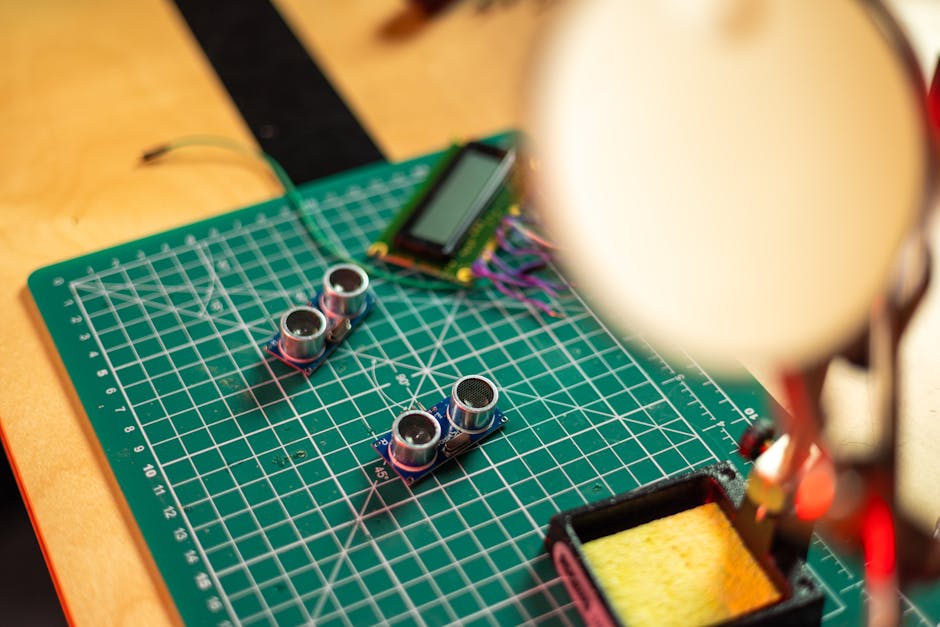
Most of these systems use a method called Pupil Center Corneal Reflection (PCCR). The tracker shines a near-infrared light (which you cannot see) at your eye. This creates a reflection on the surface of the cornea and the pupil. An infrared camera then records these reflections. Using complex algorithms, the software calculates the vector between the pupil and the corneal reflection to determine exactly where you are looking on a screen or in a room. Some AI-powered eye tracking software can even do this using a standard webcam by mapping facial landmarks.
Types of eye tracking hardware
There are several ways we can monitor the tracking of the eyes, depending on the goal:
- Screen-based trackers: These are fixed to a monitor and are perfect for studying how people use websites or read digital text.
- Wearable eye tracking glasses: Devices like those from Pupil Labs allow people to move around naturally in the real world, which is great for sports or driving studies.
- Remote webcam systems: These use existing hardware to track gaze, making them highly accessible for large-scale consumer research.
- Electrooculography (EOG): This method uses tiny electrodes placed near the eyes to measure electrical potential changes as the eyes move. It is often used in medical studies to detect driver drowsiness or sleep states.
Data visualisation and analysis
Once the data is collected, it needs to be turned into something we can understand. Researchers use “Heat Maps” to show which areas of an image received the most attention (the “hotter” the colour, the longer the gaze). “Scanpaths” show the sequence of movements, tracing the path the eye took from point A to point B. By measuring the “Time to First Fixation,” we can see how quickly a person notices a specific object, which is vital in scientific research on driver eye tracking.
The Mechanics of Human Eye Movements
To understand the tracking of the eyes, we must look at the different ways our eyes move. Even when you think your eyes are perfectly still, they are constantly making tiny adjustments to keep the image on your retina from fading.
There are four primary types of movements we monitor:
- Fixations: These are the “pauses” where the eye stays relatively still for 100 to 500 milliseconds to process information.
- Saccades: These are the rapid, ballistic jumps between fixations. Your brain actually “shuts off” visual input during a saccade so you don’t see a blur.
- Smooth Pursuits: This is the continuous tracking used when following a moving target, like a bird in flight.
- Microsaccades: Tiny, involuntary jumps that happen during a fixation to keep the photoreceptors in your eyes active.
[TABLE]
| Movement Type | Description | Purpose |
|---|---|---|
| Fixation | The eye remains still for 100 to 500 ms | To focus on and process specific information |
| Saccade | Rapid, ballistic movement between fixations | To move the fovea to a new area of interest |
| Smooth Pursuit | Continuous tracking of a moving object | To keep a moving target centered on the retina |
| Microsaccade | Tiny, involuntary movements during fixation | To prevent retinal adaptation and fading |
Common Issues with the Tracking of the Eyes and Oculomotor Dysfunction
When the coordination between the brain and the eye muscles breaks down, we call it oculomotor dysfunction. This isn’t a “sight” problem—you might still be able to see the smallest letters on the chart—but it is a “vision” problem. If your eyes cannot track a line of text accurately, reading becomes an exhausting chore rather than a simple task.
One common cause we see at our Wembley practice is Binocular Vision Dysfunction (BVD). This occurs when the eyes are slightly misaligned, forcing the muscles to work overtime to correct the image. Other causes include concussions or Traumatic Brain Injuries (TBI), which can disrupt the neural pathways responsible for eye movement. Even chronic stress or prolonged screen use can lead to a temporary breakdown in tracking efficiency. For those concerned about long-term eye growth and health, we also provide myopia management.
Symptoms of tracking difficulties in adults
In adults, tracking problems often manifest as “invisible hurdles.” You might feel like you are working twice as hard as everyone else just to stay focused. Common symptoms include:
- Losing your place while reading or needing to use a finger to keep track.
- Frequent headaches or sore eyes after desk work.
- Double vision, especially when tired.
- Poor hand-eye coordination or feeling “clumsy.”
- Difficulty focusing in busy environments, like shopping centres.
Causes of sudden tracking problems
If you notice a sudden change in your ability to track objects, it is important to seek professional advice. This can be caused by ageing-related changes in the eye muscles, but it can also be a sign of a neurological event like a stroke or the lingering effects of whiplash. In many cases, the eyes are the first part of the body to show signs of neurological fatigue or illness.
Advanced Tracking of the Eyes in Diagnostic Medicine
Eye tracking is becoming a powerhouse in the medical world. Because eye movements are so closely tied to brain function, they can act as “biomarkers” for health. For example, new AI technology is being used in remote parts of Australia to help detect diabetes-related eye disease by analysing retinal images and eye movement patterns.
Research has shown that eye tracking can help identify subtypes of autism with high diagnostic accuracy or monitor the progression of glaucoma. In the automotive industry, Polhemus Eye Tracking systems are used to detect driver drowsiness. Statistics show that these models can correctly diagnose a driver’s state between 96% and 99.5% of the time, potentially saving thousands of lives on Australian roads.
Emerging uses in technology and safety
Beyond the clinic, the tracking of the eyes is changing how we interact with technology.
- Automotive Safety: Cars can now tell if you are looking at your phone instead of the road.
- Gaming & VR: Eye tracking allows for “foveated rendering,” where the computer only draws the part of the screen you are looking at in high detail, making games look much more realistic.
- Assistive Tech: For people with severe mobility impairments, eye tracking allows them to type, communicate, and even control wheelchairs using only their gaze.
- Privacy: Some modern laptops use eye tracking to blur the screen if they detect someone else looking over your shoulder.
Solutions and Vision Therapy for Tracking Difficulties
If you are struggling with the tracking of the eyes, the most important thing to know is that you don’t have to just “live with it.” Because the brain is “plastic”—meaning it can change and adapt—we can often retrain the way your eyes and brain communicate.
At The Focal Point Optometrist, we use behavioural optometry to address these issues. This might involve specialised lenses or prisms that take the strain off your eye muscles. However, the most effective long-term solution is often vision therapy. This is a series of neuro-rehabilitation exercises designed to strengthen the binocular vision system. Unlike a stye or an infection that needs medicine, tracking problems need “gym work” for the eyes. If you ever experience a sudden loss of vision or severe pain, please see our emergency eye care page immediately.
Benefits of vision therapy include:
- Faster reading speeds and better comprehension of text.
- Improved hand-eye coordination for sports and hobbies.
- A significant reduction in headaches and visual strain.
- Better spatial awareness, which can help with balance and confidence while driving.
FAQs
What causes poor eye tracking in adults?
Poor eye tracking in adults can be caused by several factors, including undiagnosed binocular vision dysfunction, previous head injuries like concussions, or neurological events such as a stroke. It can also stem from a failure to develop these skills during childhood or from significant muscle imbalances that make it difficult for the eyes to work as a team. In our modern world, prolonged screen use and high stress can also exacerbate underlying tracking weaknesses.
Can eye tracking problems be fixed without surgery?
Yes, most eye tracking problems can be effectively managed or resolved without surgery. Vision therapy is a non-invasive, evidence-based treatment that uses a series of programmed exercises to improve the brain’s ability to control eye movements. In some cases, we may use specialised spectacles or prisms to help the eyes align more easily. Surgery is typically reserved for physical muscle obstructions or severe squints that do not respond to therapy.
How accurate is modern eye tracking technology?
Modern research-grade eye trackers are incredibly accurate, often reaching a precision of 0.01 degrees. This means they can detect movements far too small for the human eye to see. In practical applications, such as driver drowsiness detection, AI-powered systems have shown accuracy rates between 96% and 99.5%. This high level of reliability makes eye tracking a vital tool in both scientific research and medical diagnostics across Australia.
Achieving Visual Excellence with The Focal Point Optometrist
At The Focal Point Optometrist, we are dedicated to providing more than just a script for glasses. Our family-oriented practice in Wembley, West Australia, takes a healthcare-first approach to your vision. We understand that the tracking of the eyes is a fundamental skill for navigating life comfortably and efficiently.
Our independent, holistic approach means we take the time to understand your unique visual needs. Our initial consultations are comprehensive and typically take 1 hour (60 minutes), allowing us to perform in-depth assessments of your oculomotor function and binocular vision. Whether you are recovering from a concussion, experiencing visual fatigue at work, or simply want to ensure your eyes are performing at their best, we are here to support you.
When you visit us, please remember to bring your Medicare card. We look forward to helping you remove the “invisible hurdles” in your vision and helping you see the world with clarity and comfort.
Book your comprehensive eye test at The Focal Point Optometrist today