
How Do Eyes Focus? Understanding Visual Accommodation and Personalised Eye Care
At The Focal Point Optometrist in Perth, we help patients understand how their eyes focus so they can feel more confident about their vision and eye care. “How do eyes focus?” is a question about visual accommodation, which is the way the eye changes optical power to keep objects clear at different distances.
Key Takeaways
- The cornea provides most of the eye’s static refractive power, while the flexible crystalline lens fine-tunes dynamic focus adjustments.
- Visual accommodation relies on the contraction of ciliary muscles and the relaxation of suspensory zonules to increase lens curvature for close tasks.
- Shifting focus to nearby objects involves the near triad response: accommodation, pupil miosis (constriction), and inward convergence of both eyes.
- Ageing naturally reduces lens flexibility, leading to presbyopia, which can be thoughtfully managed with specialised optical solutions.
- Thorough visual assessments support long-term optical comfort. Learn more about our Comprehensive Eye Care Services to ensure your eyes receive detailed, individualised attention.
Light first enters the clear dome of the cornea, which provides most of the eye’s focusing power, before passing through the pupil to the crystalline lens. When you shift your gaze between distant scenery and nearby reading material, the ciliary muscles within the eye adjust tension on tiny supporting fibres called zonules, allowing the lens to change its curvature. This dynamic process, known as accommodation, works with pupil size changes and inward eye alignment to bring images into clear focal alignment on the light-sensitive retina.
For nearby work, the eye needs extra focusing power because light rays from close objects enter the eye in a more spread-out pattern. The crystalline lens becomes rounder to bend those rays more strongly, while the pupils constrict and both eyes turn slightly inward so the image stays single and clear.
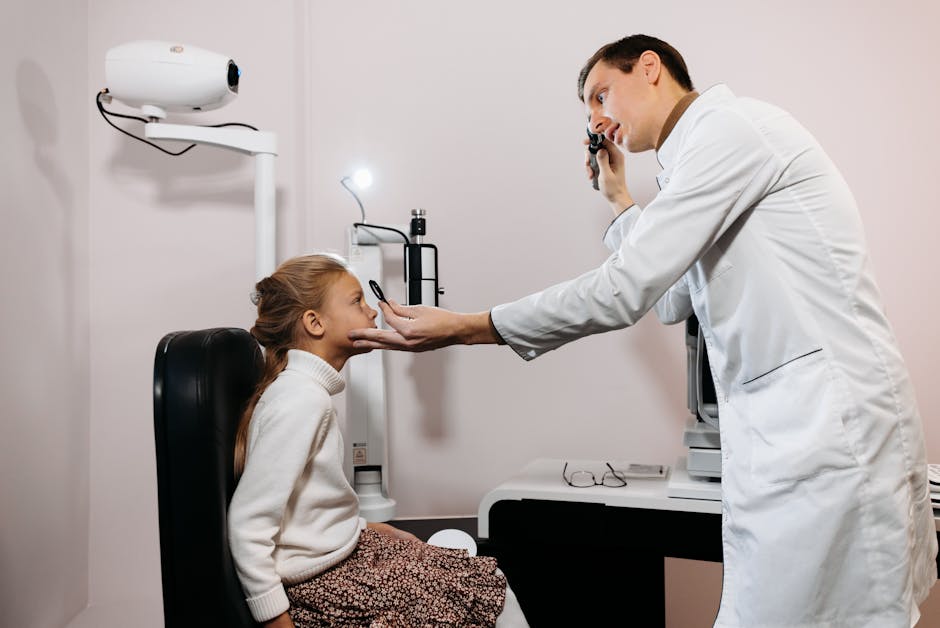
Because every person’s visual demands are different, focusing symptoms can vary. Some people notice mild blur when switching between computer screens and distant printed material, while others experience sore eyes or visual fatigue after prolonged desk work. A comprehensive eye test allows your optometrist to assess focusing stamina, lens flexibility, binocular coordination, and overall ocular health before recommending optical support.
The Optical Anatomy: How Do Eyes Focus Light?
To understand “how do eyes focus?”, it helps to examine the physical structures responsible for refracting light rays. The human eye functions much like an adaptable camera, gathering light rays from the surrounding environment and directing them to a single precise focal region on the retina. For images to appear crisp, incoming light rays must bend (refract) through clear optical media to arrive precisely at the fovea, the central region of the retina.
Light travels through four clear media: the cornea, aqueous humour, crystalline lens, and vitreous humour. The principal focusing power belongs to the front outer window (cornea) and the internal flexible lens. If the eyeball is physically too long or too short, or if the refractive power of the lens does not match the axial length of the eye, light fails to focus directly on the retina, resulting in short-sighted or long-sighted states.
When observing an object, light rays bounce off its surface into the eye. Rays coming from a distant target enter practically parallel. Conversely, light rays originating from a nearby object diverge significantly. To bring divergent light rays to a clear focal point, the visual system must apply additional refractive power through lens accommodation.
The Cornea and Crystalline Lens
The cornea is the transparent, dome-shaped outer surface covering the front of the eye. It serves as the primary static refractive structure, providing the majority of the eye’s total focusing power due to the significant difference in density between air and corneal tissue.
Directly behind the iris sits the crystalline lens. While the cornea provides fixed focusing power, the flexible crystalline lens delivers dynamic, adjustable control. Composed of clear crystallin proteins arranged in uniform layers, the lens continuously adjusts its physical curvature to vary optical power. Together, the static corneal dome and the responsive crystalline lens ensure light rays land accurately on the retina.
Ciliary Muscles and Lens Accommodation
When you look down from a distant horizon to read a book, your eye must actively increase its optical power. This dynamic capability is driven by the ciliary body, a ring of smooth muscle tissue surrounding the crystalline lens, attached via microscopic threads called suspensory zonules.
The mechanics of focusing close involve two distinct physical states:
- Distance Vision (Relaxed State): When viewing distant targets, the ciliary muscle relaxes, expanding outward. This movement creates tension on the suspensory zonules, pulling the flexible lens flat. In this state, optical power is reduced, ideal for parallel light rays.
- Near Vision (Accommodative State): When focusing on close targets, the ciliary muscle contracts, moving inward toward the lens. This contraction slackens tension on the zonules. Relieved of outward pulling forces, the elastic lens naturally springs into a rounder, steeper shape. This increased curvature bends divergent light rays more sharply into clear focus.
The Accommodation Reflex and Near Triad Response
Focusing on close objects is a synchronised neurological process coordinated by the central nervous system, known as the accommodation reflex. When retinal blur is detected, parasympathetic nerve pathways signal the ciliary muscle to contract.
To ensure smooth near vision, the visual system relies on three simultaneous actions known as the near triad response:
- Lens Accommodation: The ciliary muscles contract, slackening zonular tension so the crystalline lens thickens to increase optical power.
- Pupil Miosis (Constriction): The iris sphincter muscle contracts, narrowing pupil diameter. This acts like narrowing a camera aperture, blocking peripheral light rays, reducing aberrations, and increasing depth of field.
- Eye Convergence: Medial rectus muscles rotate both eyes inward toward the nose, ensuring the target image lands on corresponding areas of both retinas.
If any element of the near triad becomes uncoordinated, visual discomfort or sore eyes may occur during desk work. To learn more about how binocular alignment impacts daily vision, explore our guide on Binocular Vision Disorders.
Practical Solutions for Focusing Challenges
When focusing challenges arise, tailored optical solutions can provide significant relief and visual comfort. Depending on your individual lifestyle and visual assessment results, management options may include:
- Single-Vision Spectacles: Custom-crafted glasses designed specifically for dedicated close work or reading tasks.
- Multifocal Spectacle Lenses: Specialised lenses incorporating a smooth gradient of optical power, providing seamless transition between distance, intermediate (screen range), and near focus without switching glasses.
- Contact Lenses: Specialised multifocal or single-vision contact lens options. Contact lenses can be fitted for adults as well as children of any age, depending on the child’s motivation, maturity, and desire to learn.
If you have questions about which tailored solution fits your lifestyle, please feel welcome to Book an Eye Test or Contact Us to speak with our caring team.
Presbyopia and Common Accommodation Disorders
Because visual focus relies on a precise balance between muscle action, lens elasticity, and neurological coordination, changes in any component can lead to noticeable visual strain.
Age-Related Changes in Lens Flexibility
As the body naturally matures, the structural properties of the crystalline lens gradually change. Over time, internal lens fibres become firmer and less flexible, while the surrounding lens capsule becomes less compliant.
This natural reduction in elasticity results in presbyopia, the expected age-related change in near focusing power. Presbyopia usually becomes noticeable in one’s early to mid-40s, as highlighted by Healthdirect Australia. Individuals may find themselves holding reading materials further away or requiring brighter lighting for close work.
To explore presbyopia and corrective options in greater detail, read our Beginner’s Guide to Presbyopia or explore Multifocal Spectacle Lenses for customised eyewear choices.
Accommodative Insufficiency and Spasm
Focusing difficulties are not exclusive to mature adults. Children and younger adults can also experience functional accommodation challenges:
- Accommodative Insufficiency: Occurs when focusing stamina is lower than expected for an individual’s age, causing sore eyes, headaches, or fatigue during close tasks.
- Accommodative Spasm: Occurs when ciliary muscles remain continuously contracted, leaving the lens locked in a near-focused state and causing distant objects to appear temporarily blurry.
- Accommodative Infacility: Refers to difficulty rapidly changing focus between near and far targets, such as looking between desk notes and a distant presentation board.
During a comprehensive assessment, your optometrist measures focusing amplitude, flexibility, and muscle coordination to design a tailored support plan. Learn more about these conditions in our guide on Accommodative Difficulties and discover how personalised support works in our Guide to Vision Therapy.
Human Focusing Problems and Optical Correction
When the eye’s focusing power and shape are well matched, light lands clearly on the retina. When they are not matched, the image may focus in front of or behind the retina, leading to common refractive states.
Short-sightedness occurs when distant light focuses in front of the retina, often because the eye is relatively long or the optical power is too strong. Long-sightedness occurs when light would focus behind the retina, often because the eye is relatively short or the optical power is too weak. Astigmatism occurs when the front surface of the eye or internal lens has uneven curvature, causing light to focus at more than one point.
Spectacles, contact lenses, and specialised optical designs can alter how light enters the eye so the focal point falls more accurately on the retina. The right option depends on the person’s script, focusing demands, binocular vision, ocular health, and lifestyle needs.
Nurturing Your Vision with Attentive Care
At The Focal Point Optometrist in Perth, we believe that exceptional optical care begins with listening carefully to your concerns. Whether you are noticing subtle changes in your near vision, managing digital eye strain, or seeking guidance for your child’s visual development, our practice is dedicated to providing thorough, attentive support so you always feel properly seen and heard.
Every initial consultation is allocated approximately one hour, providing abundant time to discuss your visual requirements, lifestyle habits, and health history in an unhurried setting. We evaluate total ocular health, visual accommodation stamina, and binocular coordination to ensure your vision remains comfortable and clear.
When attending your consultation, please remember to bring your Medicare card so our team can assist with processing available rebates. If you are ready to experience personalised optical care tailored to your unique needs, please Book an Eye Test or Contact Us today. We look forward to supporting your ongoing visual well-being.
Frequently Asked Questions About How Eyes Focus
What is the accommodation reflex?
The accommodation reflex is an automatic neurological response when switching focus from a distant target to a near object. It consists of ciliary muscle contraction (reshaping the lens for higher refractive power), pupil miosis (constriction to increase depth of field), and binocular convergence (inward alignment of both eyes).
Why do eyes lose focusing power with age?
Loss of near focusing capability, known as presbyopia, occurs due to natural structural changes within the crystalline lens. Over time, internal lens fibres become firmer and the lens capsule loses elasticity, making it harder for the lens to change shape even when ciliary muscles contract.