
Learning to Wear Contact Lenses for Clear, Comfortable Vision
Learning to wear contact lenses successfully involves mastering clean hand hygiene, proper eyelid control, and gentle placement on the eye, supported by patient guidance rather than rushed clinical appointments. While hurried fittings can leave new wearers feeling overwhelmed or unsure about lens orientation and care routines, personalised eye care offers the calm, step-by-step coaching needed to make handling intuitive, comfortable, and safe from day one.
Key Takeaways
- Maintain meticulous hand hygiene by washing with fragrance-free soap and drying with a lint-free towel before touching lenses.
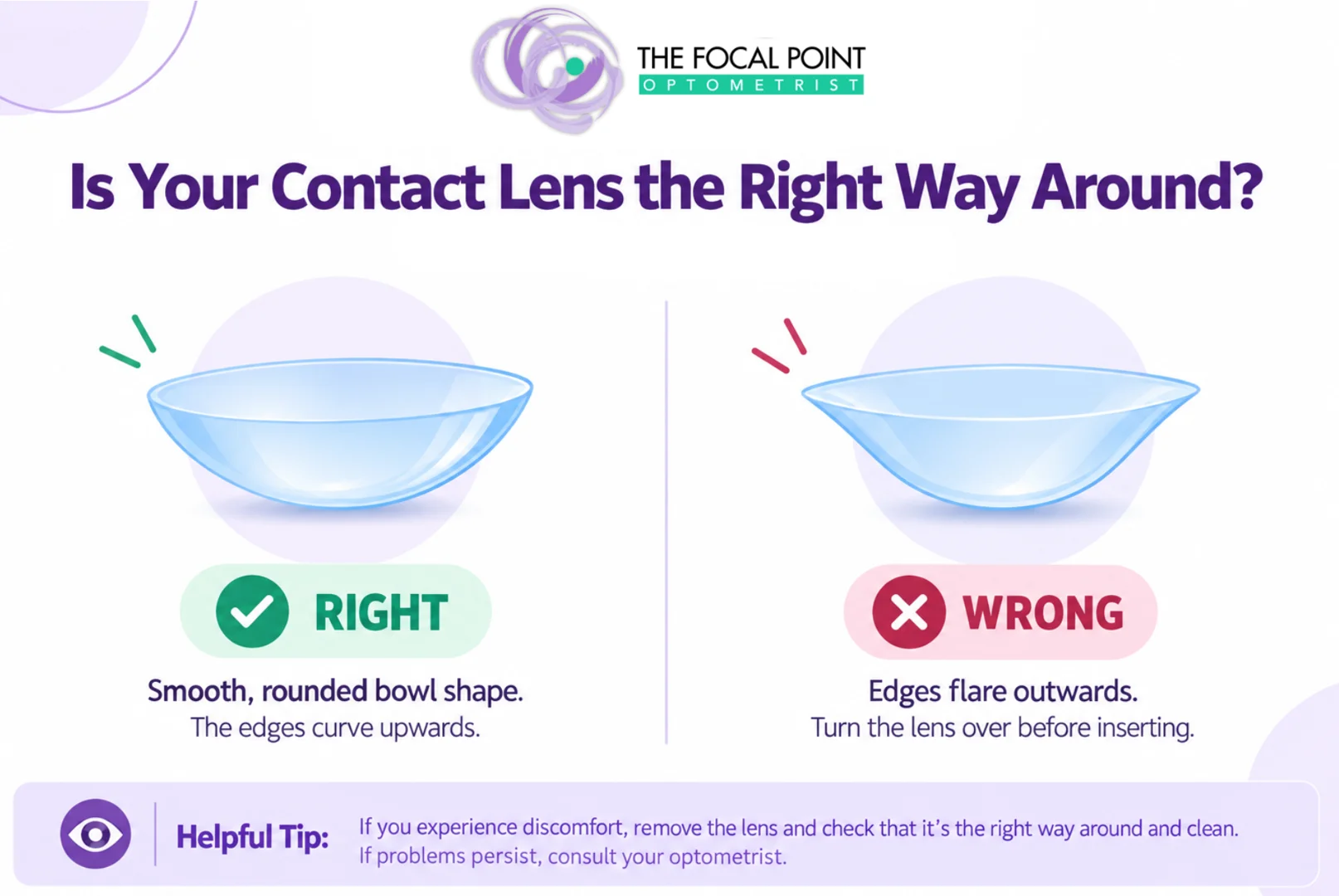
- Inspect the lens profile to ensure an upright bowl shape before placement, avoiding inverted flared edges.
- Never expose contact lenses to tap water, showers, or swimming.
- Attend regular eye examinations to ensure ongoing ocular health.
At The Focal Point Optometrist, we understand that adapting to contact lenses is an individual journey that benefits from genuine clinical support. As an independent, family-oriented optometry practice in Wembley, Western Australia, we take the time to evaluate your unique corneal shape and visual requirements, guiding you through hands-on practice in a relaxed setting so you feel completely at ease throughout your appointment.
Being properly seen and heard by your optometrist transforms contact lens wear from a daunting task into an empowering daily routine. When your questions are answered and your comfort is prioritised, you gain the practical skills, confidence, and peace of mind needed for healthy, long-term vision.
Why This Issue Should Not Be Ignored
Corneal health depends on careful daily hygiene and proper handling routines. The cornea is a clear, living tissue on the front surface of the eye that requires a continuous supply of oxygen directly from the atmosphere and tear film. When a contact lens sits on the eye, it acts as a permeable barrier. If lenses are worn beyond their intended schedule, poorly cleaned, or made from materials with low oxygen permeability, the cornea may experience reduced oxygen levels (hypoxia). Prolonged hypoxia can lead to corneal swelling, micro-cysts, compromised epithelial integrity, and increased vulnerability to infections.
Microbial keratitis represents one of the most significant complications linked to improper contact lens use. This condition involves corneal inflammation and ulceration caused by bacteria, fungi, or amoebae. The risk escalates substantially when lenses come into contact with domestic tap water, bottled water, or recreational water sources. Tap water frequently contains Acanthamoeba, a microscopic organism that can adhere to lens materials and cause severe corneal infections that are difficult to manage and require immediate medical evaluation. For this reason, contact lenses must never be exposed to water while showering, swimming, or sitting in hot tubs.
Sleeping in daily wear contact lenses presents another serious hazard to ocular health. Closed eyelids substantially reduce the oxygen available to the cornea, creating an ideal environment for microbial proliferation and epithelial surface breakdown. Clinical discussions surrounding contact lens success emphasise that thorough patient education, strict adherence to disinfection protocols, and avoiding water exposure are fundamental to preserving long-term eye health. Storing reusable lenses in fresh multipurpose solution rather than topping up old fluid ensures that antimicrobial agents remain fully effective at eliminating bio-burden and protecting your vision.
Common Questions and Early Adjustment Experiences
When first handling lenses, new wearers often encounter normal physiological sensations as the eyes adjust to an unfamiliar object:
- Foreign Body Sensation: The eyelid contains dense sensory nerve endings that notice the edge of the lens during blinking. This sensation generally subsides over the initial days as the tear film stabilises smoothly over the material.
- Initial Reflex Tearing: Placing an object on the ocular surface naturally stimulates the lacrimal gland to produce reflex tears. This response diminishes as your insertion technique becomes quicker, smoother, and calmer.
- Fluctuating Vision: In the early stages, rapid blinking or slight lens dehydration can cause visual clarity to shift temporarily, particularly during intense concentration, reading, or screen use.
- Lens Inversion Confusion: Placing a contact lens inside-out causes mild irritation, poor centring, and blurred sight. A correct lens looks like a smooth, symmetrical bowl with upright edges, whereas an inverted lens resembles a saucer with flared rim edges.
- Dry Eye Sensations: Air conditioning, wind, or extended wear periods can draw moisture away from the lens matrix, creating a gritty or tired feeling toward the end of the day.
- Mild Light Sensitivity: Initial reflex tearing and mild surface awareness may cause slight sensitivity in bright sunlight or under harsh fluorescent lighting.
- Lens Displacement: Vigorous eye rubbing or improper eyelid control during insertion can cause the lens to slide onto the white part of the eye (the sclera) or fold beneath the upper lid.
- Difficulty with Eyelid Control: The natural human blink reflex causes the eyelids to squeeze shut involuntarily as a finger approaches the eye. Overcoming this reflex requires structured lid holding techniques that isolate the upper and lower lash margins securely.
When to See an Optometrist
While mild awareness is normal during the initial adaptation period, certain symptoms indicate the need for prompt clinical evaluation. You should remove your lenses immediately and seek professional care if you experience:
- Persistent or increasing sore eyes and redness
- Sharp, stabbing, or aching eye pain
- Cloudy, foggy, or suddenly reduced vision that does not clear with blinking
- Unusual watery, yellow, or green discharge from the eye
- Marked photophobia (intolerance to light)
- A feeling that a torn lens fragment remains in the eye
- Deep corneal ache or halo effects around streetlights
For sudden or severe discomfort, our dedicated emergency eye care services provide timely assessment of acute corneal concerns. In complex clinical situations involving severe infections or surgical matters, we coordinate directly with an ophthalmologist, while general medical needs such as oral antibiotics are referred to a General Practitioner (GP). If you need a routine script check, fitting review, or replacement assessment, you can conveniently Book an Eye Test online or submit an inquiry directly through our Contact Us page. Please remember to bring your Medicare card to your appointment.
Practical Solutions and Reassurance for Learning to Wear Contact Lenses
Gaining confidence with contact lenses is entirely a matter of practice, patience, and systematic technique. Understanding the fundamental maintenance differences between lens modalities helps ensure your daily routine remains safe and manageable:
| Lens Modality | Daily Care Protocol | Disinfection Requirement | Storage Case Hygiene |
|---|---|---|---|
| Daily Disposable | Insert in morning; discard into bin immediately upon evening removal. | None required; single-use only. | No storage case or solution needed. |
| Reusable (Monthly / Fortnightly) | Clean using a gentle rub-and-rinse technique with approved solution after removal. | Soak in fresh multipurpose or peroxide solution for at least 6 hours. | Rinse case with fresh solution, air-dry upside down daily, and replace case monthly. |
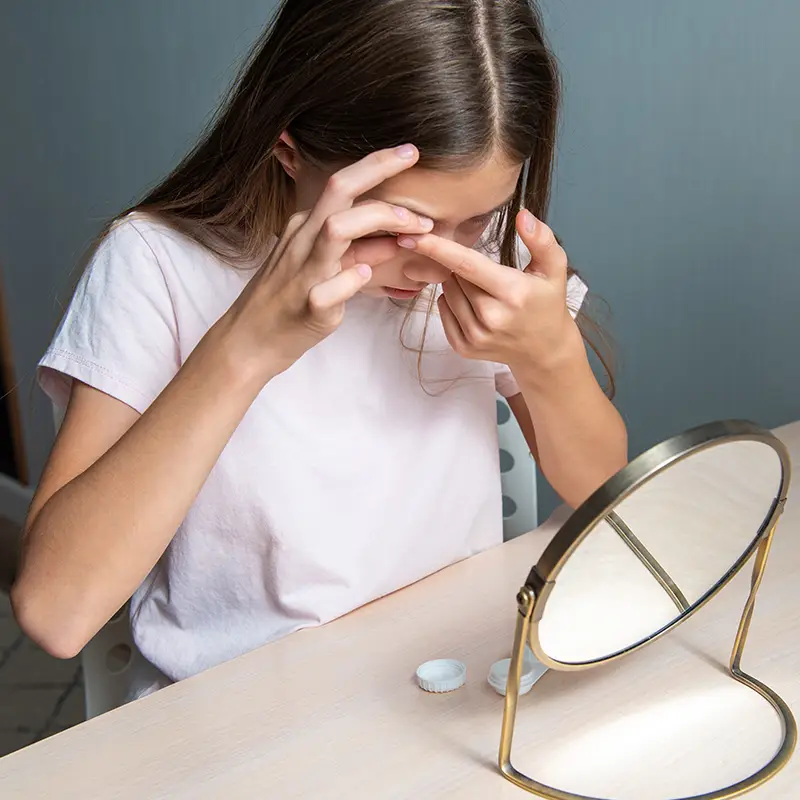
Before handling lenses, prepare a clean, flat surface and place a mirror at eye level. Practising steady, calm breathing prevents the body from tensing, which naturally reduces involuntary eyelid squeezing.
Step-by-Step Techniques When Learning to Wear Contact Lenses
Insertion Protocol
- Hand Hygiene: Wash your hands thoroughly using an antibacterial, fragrance-free liquid soap. Dry completely with a clean, lint-free towel to ensure no fibres or water droplets transfer to the lens surface.
- Inspect the Lens: Transfer the lens onto the tip of your dry index finger on your dominant hand. Check that it is clean, moist, and free of tears. Confirm that it forms a smooth, upright bowl shape rather than a saucer with outward-flaring edges.
- Secure the Eyelids: Use the middle finger of your non-dominant hand to reach over your brow and hold the upper eyelid firmly against the brow bone. Use the middle finger of your dominant hand to pull down the lower eyelid, exposing the white of the eye.
- Place the Lens: Looking straight into the mirror or slightly upward, smoothly place the lens directly onto the central cornea or the lower white part of the eye.
- Settle and Release: Release the lower eyelid first, then slowly release the upper lid. Look down and blink gently several times to allow the tear film to centre the lens.
Removal Protocol
- Wash and Dry Hands: Repeat thorough hand hygiene using fragrance-free soap and a lint-free towel.
- Retract the Lids: Look upward and use your non-dominant hand to hold the upper eyelid securely while pulling the lower eyelid down with the middle finger of your dominant hand.
- Slide and Pinch: Place the soft pad of your dominant index finger on the lower edge of the contact lens. Slide the lens downward onto the white part of the eye (sclera), then gently pinch the lens between the pads of your thumb and index finger to lift it away.
Managing Early Challenges When Learning to Wear Contact Lenses
Building comfort involves establishing a structured wearing schedule. On your first day, aim for approximately 2 to 4 hours of continuous wear, increasing by 1 to 2 hours each day as your eyes comfortably adapt.
If you experience mild dryness during the day, apply lubricating drops formulated specifically for contact lens wearers. If a daily disposable lens drops onto a counter, sink, or clothing, discard it immediately and open a fresh foil pack. If a reusable lens drops onto a clean surface, it must be thoroughly rubbed, rinsed, and soaked in fresh multipurpose solution before reinsertion. Should your vision appear blurry, check that the lens is centred, verify that the right and left lenses have not been swapped, or remove the lens to confirm it was not inserted inside-out. If a lens feels displaced beneath the eyelid, close your eye, apply a lubricating drop, and look toward the direction of discomfort while gently massaging the lid to guide the lens back into central alignment.
Empowering Your Vision Through Supportive Coaching
Stepping into contact lens wear opens up exceptional visual freedom, whether for sports, active hobbies, work, or social occasions. The journey is made straightforward and enjoyable when supported by practitioners who listen carefully to your goals and give you the time needed to master every technique at your own pace.
At The Focal Point Optometrist, we believe that learning to wear contact lenses should always be an empowering, calm, and reassuring journey. We take the time to ensure you feel supported through every step of your lens fitting, answering your questions and refining your technique so you can enjoy comfortable, clear sight with absolute confidence.
Frequently Asked Questions About Learning to Wear Contact Lenses
How long does a contact lens fitting and teach appointment take?
An initial contact lens consultation and teach appointment at our Wembley clinic typically takes approximately one hour. This extended timeframe ensures we can carry out a detailed examination of your corneal health, select the appropriate lens design for your optical needs, and give you plenty of unhurried time to practice inserting and removing your lenses safely under the guidance of our team.
What should I bring to my contact lens appointment?
Please bring your current pair of spectacles, your valid Medicare card, and any details of previous scripts or lens packaging if you have worn lenses in the past. Having your glasses with you allows us to compare your spectacle script directly against your contact lens parameters and ensures you have a comfortable visual backup after removing trial lenses in the clinic.
How often should contact lens wearers have an eye test?
Contact lens wearers should undergo an eye test every 12 months, or sooner if recommended by your optometrist. Regular annual reviews are essential for assessing corneal oxygenation, tear film stability, and eyelid health, as well as confirming that your script continues to deliver sharp, comfortable visual acuity across your daily activities.
Can children be fitted with contact lenses?
Yes, children of any age can be fitted with contact lenses depending on their personal motivation, maturity, and willingness to learn correct hygiene routines. Many young wearers adapt very well to daily disposables for sports, active hobbies, or myopia management programmes, and our optometrists provide patient, step-by-step coaching tailored specifically to younger individuals and their families.
What should I do if a contact lens feels stuck or moves off-centre?
If a contact lens feels stuck or shifts onto the white part of the eye, remain calm and avoid rubbing your eye. Instil several drops of contact lens rewetting solution or sterile saline to hydrate the ocular surface, close your eyes, and gently move your eye in the direction of the lens while softly touching the eyelid to guide it back toward the cornea, or visit our clinic for professional assistance if it remains dislodged.