
Why Understanding Glaucoma and Symptoms Could Save Your Sight
Glaucoma can be tricky to spot because it often develops without any symptoms in the early stages. According to Glaucoma Australia, more than 300,000 Australians have glaucoma, and up to half of them may not even know it. Because vision can be affected before any signs appear, regular eye tests are the best way to protect your sight.
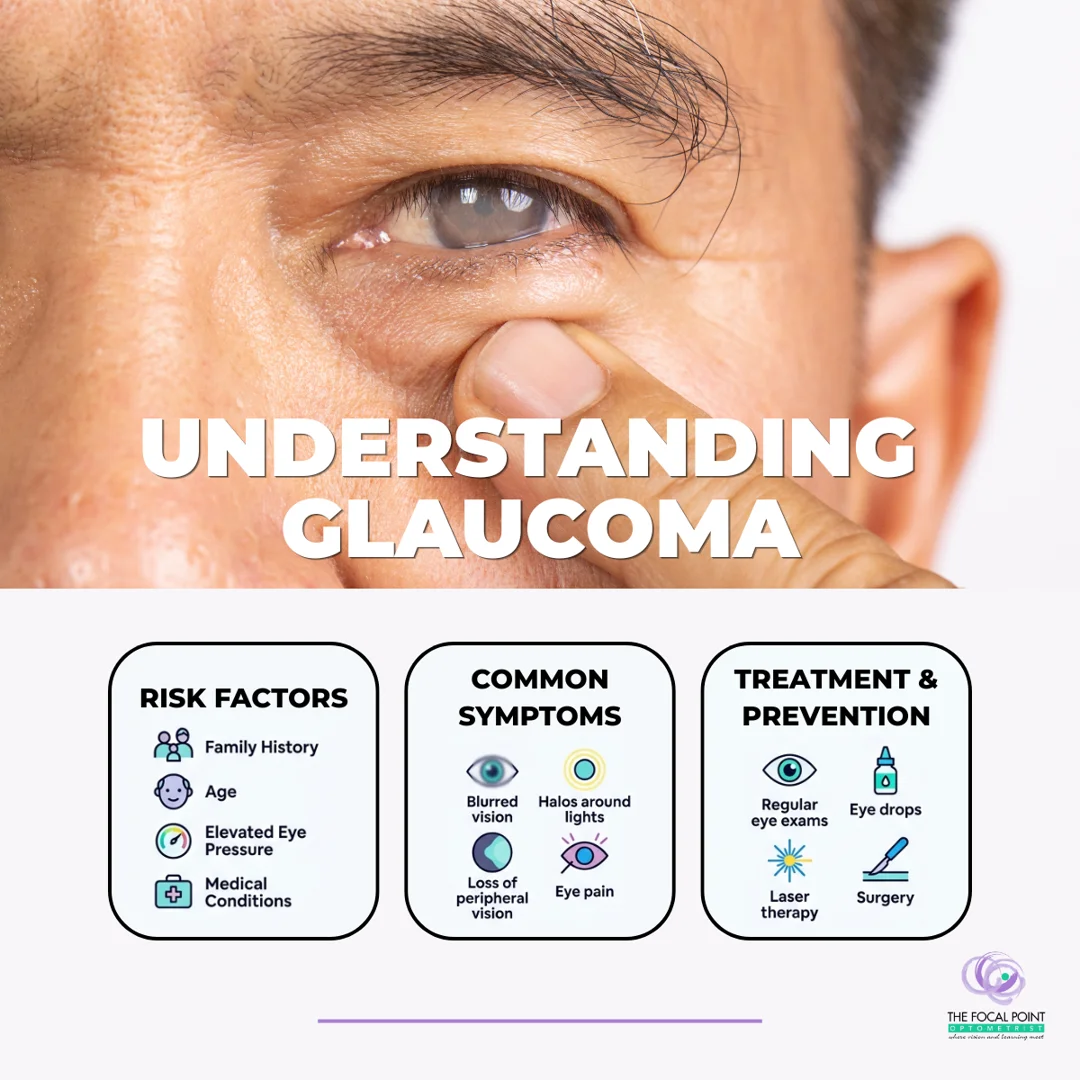
Here is a quick summary of the key glaucoma symptoms to know:
- Glaucoma often has no early warning signs: The most common type develops silently and painlessly.
- Know the difference: Open-angle glaucoma is a slow, gradual condition, while acute angle closure glaucoma is a sudden medical emergency.
- Halos around lights, blurred vision, or sore eyes: These can signal acute angle-closure glaucoma, which is a medical emergency and requires immediate treatment.
- Treatment is simple and effective: Early detection allows us to manage the condition easily with eyedrops, laser treatment, or surgery.
- Vision loss from glaucoma is permanent: Routine eye tests are the only reliable way to catch glaucoma before it causes irreversible damage.
At The Focal Point Optometrist, we understand how much is at stake when it comes to your long-term vision. As a family-oriented practice based in Wembley, Western Australia, we take the time to look beyond a basic script for glasses. Our initial consultations run for a full hour, giving us the space to carry out a thorough assessment of your eye health, including screening for conditions like glaucoma that often show no obvious signs until it is too late.
In this guide, we will walk you through everything you need to know about glaucoma and symptoms: what to look for, who is most at risk, when to seek urgent care, and how regular eye tests with us can help protect your sight for the long term.
What is Glaucoma and How Does it Affect Your Vision?
Glaucoma is a condition that can quietly damage your optic nerve, the part of your eye that sends what you see to your brain. Most often, it happens when the pressure inside your eye, called intraocular pressure (IOP), gets too high.
Your eyes are constantly making a clear fluid called aqueous humor. This fluid nourishes your eye and keeps it in shape. It usually drains out smoothly through a tiny drainage area. But if the drainage isn’t working properly, fluid can build up and increase pressure in the eye.
Not everyone reacts the same way: some people can have high eye pressure without any damage (ocular hypertension), while others may develop glaucoma even with normal pressure (normal tension glaucoma). Over time, high pressure can harm the optic nerve fibres, and any vision lost cannot be restored. That’s why regular eye checks are the best way to catch glaucoma early and protect your sight.
The Role of the Optic Nerve
The optic nerve is essentially the “data cable” of the eye. It is made up of more than one million tiny nerve fibres that carry visual information from the retina to the brain. When we see something, the retina converts light into electrical signals, which the optic nerve then delivers to the brain to be interpreted as an image.
When glaucoma and symptoms begin to manifest, it is because these individual nerve fibres are being damaged or “pinched” by high pressure. Think of it like an electric cable where individual wires start failing one by one. Because there are so many fibres, your brain can often compensate for the loss of a few, which is why you might not notice any vision changes until a significant number of fibres have been destroyed.
Understanding Eye Pressure
Healthy eye pressure is vital for maintaining the structure of the eye. Most people have an IOP between 10 and 21 mmHg (millimetres of mercury). However, “normal” is relative. Some individuals can have pressure in the high 20s without suffering nerve damage, while others may develop glaucoma even with pressure in the mid-teens. This is known as normal-tension glaucoma.
The pressure builds up when the production of aqueous humour exceeds its drainage. This can happen because the drainage angle is physically blocked (angle-closure) or because the drainage channels have become less efficient over time (open-angle). Recent scientific research on intraocular pressure highlights that managing this pressure is the only proven way to slow the progression of the disease.
Understanding the Two Main Types of Glaucoma
It is helpful to distinguish between the two main types of glaucoma, as their symptoms and urgency levels are very different.
| Feature | Primary Open-Angle Glaucoma | Acute Angle-Closure Glaucoma |
|---|---|---|
| Onset | Very slow and gradual | Sudden and rapid |
| Pain | None (Painless) | Severe eye and head pain |
| Vision Changes | Gradual peripheral loss | Sudden blurriness and halos |
| Physical Signs | Eye looks normal | Sore eyes (redness), cloudy cornea |
| Urgency | Chronic (Requires regular monitoring) | Emergency (Immediate treatment needed) |
Symptoms of Primary Open-Angle Glaucoma
In primary open-angle glaucoma, the eye’s drainage angle stays open, but the tiny drain (called the trabecular meshwork) becomes less effective over time. This causes pressure to build up slowly, usually without pain. Vision loss typically starts in the side (peripheral) vision and gradually spreads inward, creating a “tunnel vision” effect. Central vision, which you use for reading or recognising faces, is usually the last to be affected. Because it progresses quietly, many people don’t realise anything is wrong until the condition is advanced.
Acute Angle-Closure as a Medical Emergency
Acute angle-closure glaucoma occurs when the iris (the coloured part of the eye) is pushed forward and physically blocks the drainage angle. It is like a piece of paper suddenly sliding over the sink drain. The pressure in the eye can skyrocket from a normal 15 mmHg to over 50 mmHg in a matter of minutes.
Symptoms of an acute attack include:
- Intense, unbearable eye pain.
- A severe headache or brow ache.
- Nausea and vomiting (often caused by the “oculoabdominal reflex”).
- Sore eyes that appear very red.
- Sudden, dramatic loss of vision.
If you or someone you know experiences these symptoms, seek emergency care immediately, either at a hospital or from an ophthalmologist. Rapid treatment is crucial to prevent permanent vision loss, which can occur within hours or days.
Normal-Tension and Pigmentary Glaucoma Signs
Not all glaucoma fits the high-pressure mould. In normal-tension glaucoma, the optic nerve is damaged even though the pressure stays within the “normal” range. This may be due to poor blood flow to the nerve or an inherited sensitivity. Symptoms are identical to open-angle glaucoma, which makes the 1-hour comprehensive eye test we provide at The Focal Point Optometrist even more critical—we don’t just “puff” your eye and move on; we look at the nerve itself.
Pigmentary glaucoma is another unique form where pigment granules from the back of the iris flake off and clog the drainage system. Interestingly, these patients often notice symptoms like blurred vision or halos specifically after vigorous exercise, such as jogging or playing sports. The physical activity stirs up the pigment, causing a temporary pressure spike.
Recognising Glaucoma and Symptoms: Early Warning Signs
While early-stage glaucoma is often asymptomatic, there are subtle changes that can occur as the disease progresses. Being aware of these can help you identify a problem before it becomes a crisis.
One of the most common early warning signs is a decrease in contrast sensitivity. You might find it harder to distinguish objects from their background, especially in low-light conditions. You might also notice that your night vision is not as sharp as it once was, or that you are increasingly sensitive to glare from oncoming headlights while driving through Wembley at night.
Glaucoma and Symptoms of Blurred Vision
Blurred vision associated with glaucoma often behaves differently from the blur caused by needing a new script for spectacles. In glaucoma, the blurriness can be “patchy” or occur in waves. Some patients describe it as a hazy or steamy quality to their sight, almost like looking through a fogged-up window.
These fluctuations can sometimes be mistaken for simple eye strain or dry eye. However, if the blurriness is accompanied by a feeling of heaviness in the eye or a dull ache around the brow, it is essential to have an eye test immediately. In some cases, these “waves” of blur are actually small spikes in eye pressure that are warning signs of a more serious blockage.
Identifying Glaucoma and Symptoms in Daily Life
Because the loss of peripheral vision is so gradual, people often adapt without realising it. We often tell our patients to look for “clumsiness” that seems out of character. Do you find yourself:
- Bumping into door frames or furniture more often?
- Struggling to navigate stairs because the steps seem to blend together?
- Getting startled by people or cars that seem to “appear out of nowhere” from your side?
- Missing objects on the dinner table that are just outside your direct line of sight?
If these experiences sound familiar, they may be signs of a shrinking visual field. For younger patients, it is also important to remember that while glaucoma is more common in older adults, it can affect children and teenagers, too. You can learn more about our specialised children’s eye exams if you have concerns about a younger family member.
Seeing Halos Around Lights
Seeing rainbow-coloured circles or halos around bright lights is a classic symptom of a sudden rise in eye pressure. This happens because high pressure causes the cornea (the clear front window of the eye) to swell with fluid. This swelling scatters light as it enters the eye, creating the halo effect.
While halos can also be a sign of cataracts or even a side effect of certain medications, in the context of glaucoma and symptoms, they are often a precursor to an acute attack. If you see halos and experience a sudden, sharp pain in your eye, this is a medical emergency.
Who is at Risk for Developing Glaucoma?
While anyone can develop glaucoma, your risk increases as you get older, especially once you’re over age 50. In Australia, the chance of having glaucoma rises with age: by about age 40, around 1 in 200 people have glaucoma, and by age 80 that increases to roughly 1 in 8.
Primary congenital glaucoma is very rare, and it is estimated to occur in about 1 in 10,000 babies. Because glaucoma can affect people of all ages and may not show obvious symptoms early on, awareness and regular eye tests are important for everyone.
Medical Conditions and Risk Factors
Your overall health is intrinsically linked to your eye health. Several systemic conditions can increase the likelihood of developing glaucoma:
- Diabetes: High blood sugar can damage the blood vessels in the retina and increase eye pressure.
- High Blood Pressure (Hypertension): While high blood pressure doesn’t always mean high eye pressure, the two are often linked, and extreme fluctuations can stress the optic nerve.
- Heart Disease: Poor circulation can reduce the amount of oxygen and nutrients reaching the optic nerve.
- Long-term Steroid Use: Whether in the form of eye drops, inhalers, or tablets, prolonged use of corticosteroids can cause a significant rise in IOP in some people.
Physical Eye Attributes
The physical “build” of your eye can also be a risk factor.
- Thin Corneas: Research suggests that people with thinner central corneas are at a higher risk of developing glaucoma, possibly because standard pressure tests may underestimate the true pressure inside their eyes.
- Short-sightedness: Highly short-sighted individuals often have longer eyeballs and thinner optic nerve structures, making them more vulnerable to pressure damage.
- Long-Sightedness: Long-Sighted People often have “crowded” front chambers, which increases the risk of angle-closure glaucoma.
- Previous Eye Injury: A significant blow to the eye (trauma) can damage the drainage system, leading to “secondary glaucoma” years after the injury has healed.
The Importance of Family History
If you have a first-degree relative (a parent or sibling) with glaucoma, your risk of developing the condition is up to ten times higher than that of the general population. Because many forms of glaucoma are hereditary, knowing your family’s eye health history is one of the most powerful tools you have.
We always encourage our patients to discuss eye health at family gatherings. If you know a relative has the condition, it allows us to be even more vigilant during your eye tests. Early glaucoma diagnosis in these cases is the key to preserving sight across generations.
Practical Solutions and Reassurance for Your Eye Health
A diagnosis of glaucoma or being identified as a “glaucoma suspect” can be concerning. Thankfully, modern optometry provides highly effective tools for early detection and ongoing management. At The Focal Point Optometrist, we use advanced technology to identify glaucoma in its earliest stages, helping to protect your vision before significant loss occurs.
When you visit us in Wembley, we don’t just check your script for spectacles. We perform a holistic assessment. This includes:
- Tonometry: Measuring your eye pressure (the “puff” test or more advanced contact methods).
- Pachymetry: Measuring the thickness of your cornea.
- Visual Field Testing: Mapping your peripheral vision to see if there are any “missing” spots.
- OCT Imaging: Optical Coherence Tomography is a non-invasive “ultrasound with light” that allows us to see the individual layers of your optic nerve in 3D. This can detect damage years before it shows up on a visual field test.
What to Expect During Your Eye Test
We believe that quality care takes time. That is why our initial eye tests are scheduled for a full hour. We want to hear about your lifestyle, your family history, and any subtle symptoms you might be experiencing.
During the test, we may need to use dilating eye drops. These drops widen your pupils so we can get a clear, unobstructed view of the optic nerve and retina. Please note that these drops can make your vision a bit blurry and sensitive to light for a few hours, so we recommend bringing a pair of sunglasses and potentially having someone else drive you home. Remember to bring your Medicare card to your appointment, as many of our diagnostic services are covered.
Management and Treatment Options
If we do detect signs of glaucoma, the goal of treatment is simple: lower the eye pressure to a level that is safe for your specific optic nerve. This is usually achieved through:
- Medicated Eye Drops: These are the most common first-line treatment. Some drops reduce the amount of fluid the eye produces, while others help the fluid drain more effectively.
- Laser Treatment: Procedures like Selective Laser Trabeculoplasty (SLT) can be performed to “clean out” the drainage meshwork. This is a quick, in-office procedure that can often reduce the need for daily drops.
- Specialist Referral: As optometrists, we are your first line of defence. If you require surgery or advanced medical management, we will coordinate your care with a trusted ophthalmologist (an eye surgeon) and keep your GP informed to ensure a holistic approach to your health.
Protecting Your Vision Every Day
Beyond clinical treatment, there are steps you can take to support your eye health. Wearing eye protection during sports or DIY projects can prevent traumatic glaucoma. Maintaining a healthy lifestyle, including regular exercise and a diet rich in leafy greens, supports overall vascular health, which is good for your optic nerve.
The most important thing you can do, however, is to be consistent. If you are prescribed eye drops, use them every single day, exactly as directed. And never miss a follow-up appointment. Glaucoma management is a lifelong journey, but with the right team behind you, it is a journey you can take with confidence.
FAQs
Can vision lost to glaucoma be restored?
No, vision loss caused by glaucoma is permanent and cannot be reversed. This is why early detection through regular eye tests is so critical. While we cannot bring back lost sight, we can work with specialists to implement treatments that slow or stop further progression.
Is high eye pressure the only sign of glaucoma?
No, eye pressure is just one factor. Some people develop glaucoma with “normal” pressure (Normal-Tension Glaucoma), while others may have high pressure without nerve damage. A comprehensive eye test that looks at the optic nerve and your visual field is the only way to get an accurate diagnosis.
How often should I have an eye test to check for glaucoma?
For most adults, an eye test every 2 years is recommended. However, if you are over 50, have a family history of glaucoma, or have other risk factors like diabetes, we may recommend annual screenings to ensure any changes are caught immediately.
A Clearer Future for Your Vision
At The Focal Point Optometrist, we are dedicated to providing the Wembley community with a higher standard of eye care that goes beyond a simple script for spectacles. Our independent, family-oriented practice focuses on the long-term health of your eyes, ensuring that conditions like glaucoma are identified and managed with the utmost precision.
By choosing our comprehensive 1-hour consultations, you are investing in a thorough assessment that prioritises your visual well-being. Don’t wait for symptoms to appear before taking action.